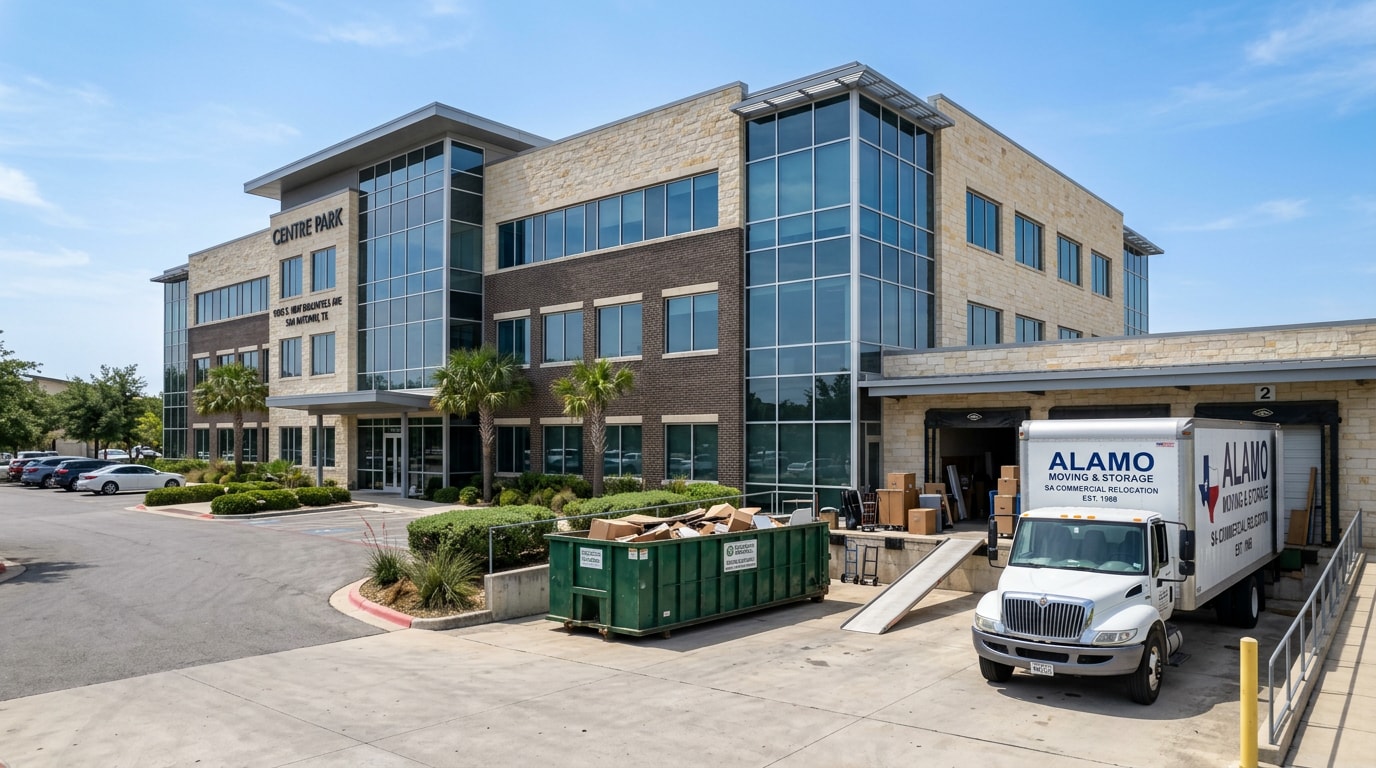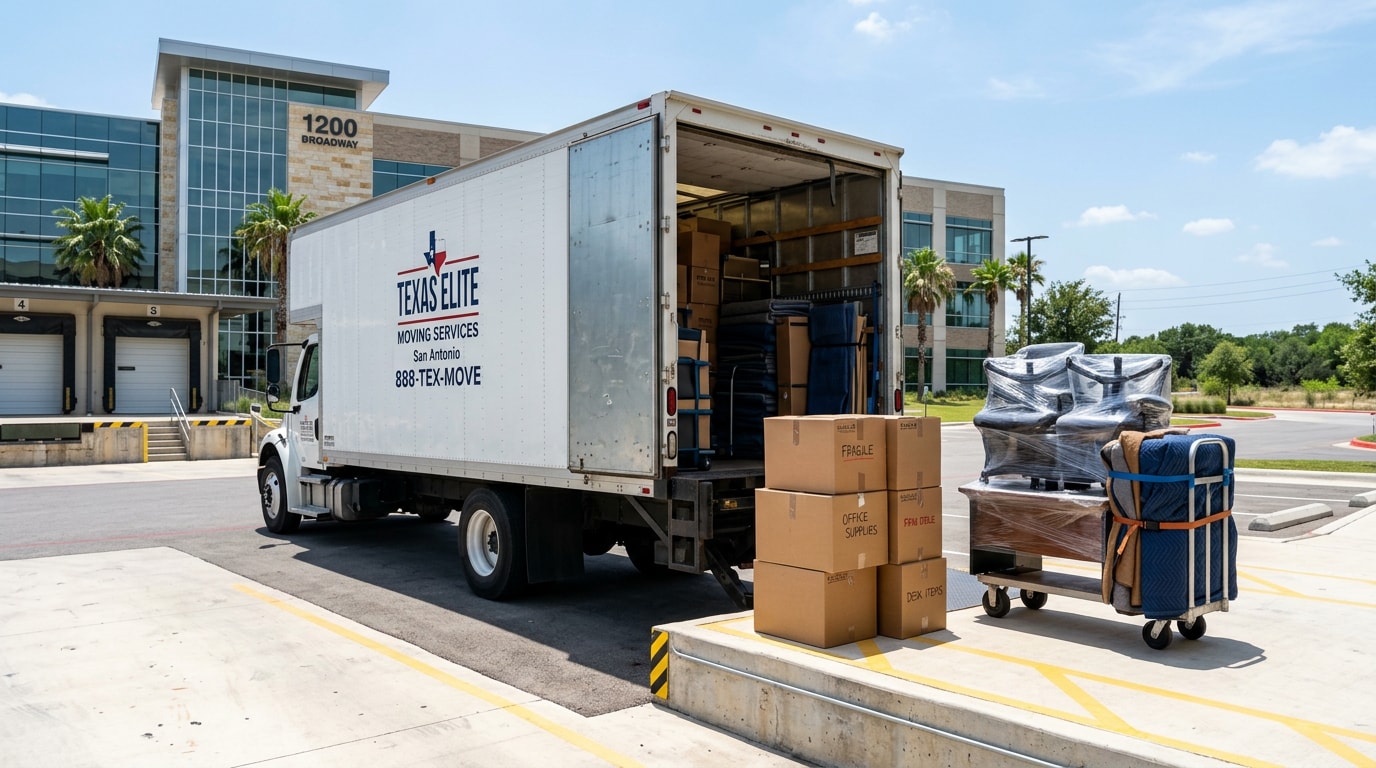
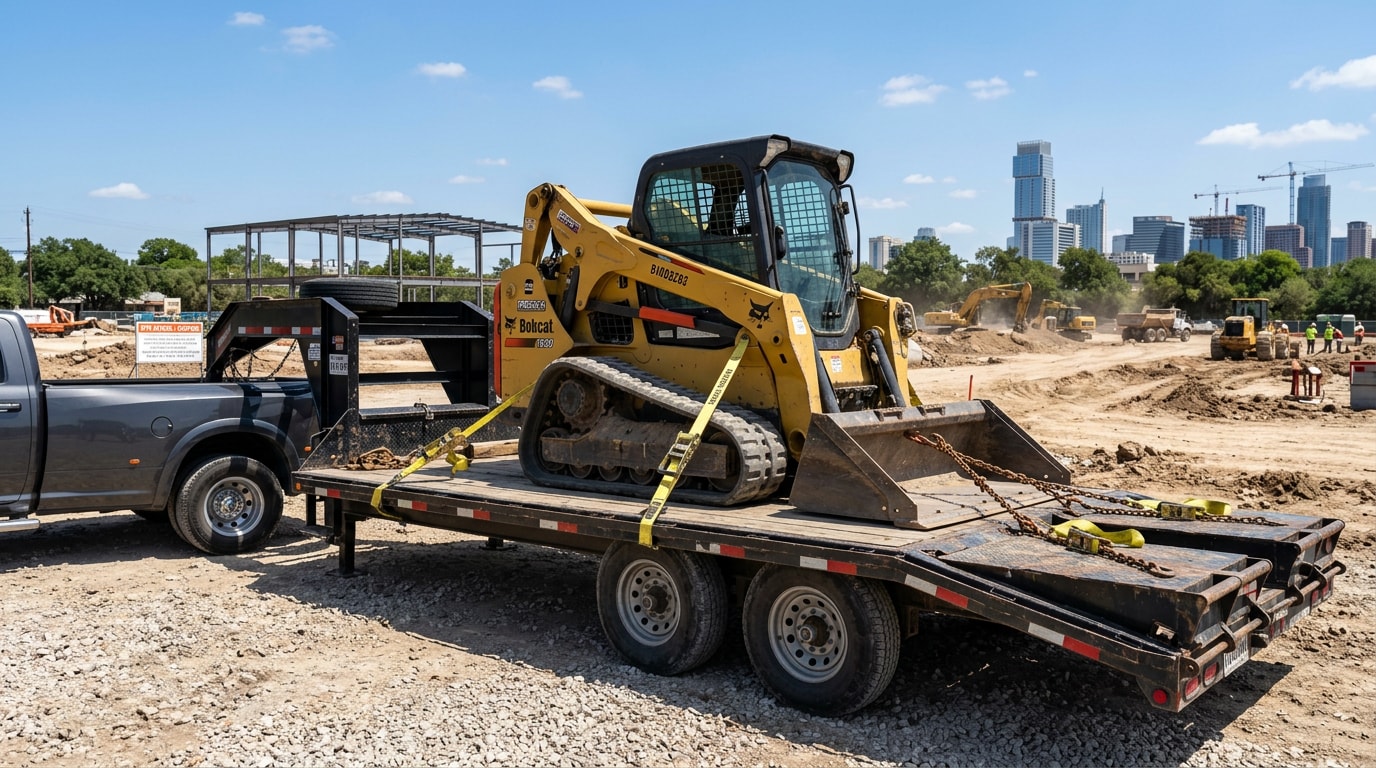
Flatbed moving services in Austin, TX solve one specific problem: your load is too big, too heavy, or too oddly shaped for a box truck. Skid steers, excavators, roll-off containers, boats, and oversized furniture all need an open deck, proper rigging, and a crew that knows how to secure a load for the highway. This guide covers when flatbed hauling makes sense, which trailer fits the job, and what Texas permit rules require before the truck can legally move.
What Counts as a Flatbed Move
Flatbed moving uses an open-platform trailer with no walls and no roof. Equipment can be loaded from any side, by crane, forklift, or ramp, instead of through one rear door. That open deck is what makes it possible to haul loads a standard moving van simply cannot accept.
Two related terms get mixed up often:
- Flatbed freight usually means scheduled commercial shipping of palletized goods or building materials.
- Flatbed moving / hauling usually means a one-off job: relocating a piece of machinery, a vehicle, a boat, or an oversized household item.
Both use the same open-deck trailer, just with different cargo and different timelines. Common loads for an open-deck trailer in and around Austin include:
- Skid steers, excavators, and other construction equipment
- Roll-off dumpsters and waste containers
- Manufacturing and production machinery
- RVs, boats, and utility trailers
- Building materials, lumber, and pipe
- Oversized furniture, safes, or antiques that will not clear a standard doorway
If your load is tied to a construction or teardown project, our demolition contractor team can tell you upfront whether a flatbed, a roll-off, or both will be needed on site.
Why Flatbed Beats a Box Truck for Oversized Loads
Three things set flatbed apart from an enclosed trailer: accessibility, versatility, and proper load securement. Because there are no walls, a crew can load from the top, the side, or the rear, which matters in tight Austin spots.
Picture a downtown condo move where a piece of gym equipment or a large sectional has to come out through a balcony. A flatbed with a crane or hoist can reach where a box truck cannot back in. Or picture a job site along MoPac where a skid steer needs to roll straight onto a trailer deck without being disassembled to clear a doorway.
We load skid steers, mini-excavators, and demolition debris onto open decks for Austin-area job sites on a regular basis. The most common mistake we see from customers is assuming any driveway or gate will clear a loaded trailer; ground clearance and turning radius matter just as much as the weight of the load.
This hauling approach also tends to cost less for a single oversized item, since you are not paying for unused interior cargo space. The tradeoff is that an exposed load must be secured correctly every time. Straps, chains, and edge protection are not optional. They are governed by federal cargo securement rules that any legitimate flatbed operator in Austin follows on every run, as outlined by FMCSA. If you want a cost estimate for your specific load, you can request a quote before you book anything.
Flatbed Trailer Sizes, Weight Limits & Texas Permit Rules
Most Austin flatbed jobs run on one of four setups. The right one depends on load length, weight, and whether the cargo drives on under its own power or needs to be craned or winched aboard.
| Trailer Type | Typical Deck Length | Best For | Loading Method |
|---|---|---|---|
| Standard flatbed | 48 ft | Machinery, building materials, multiple smaller loads | Crane, forklift, or ramp |
| Extended flatbed | 53 ft | Longer equipment, extra deck space | Crane, forklift, or ramp |
| Gooseneck (heavy deck) | ~40 ft deck | Skid steers, rollers, tracked equipment | Drives on via megaramps |
| Tilt-deck car hauler | ~20 ft deck | Cars, light trucks, ATVs | Winched on, no ramps needed |
Federal rules set the baseline for weight on public highways regardless of trailer type. On the Interstate System, the federal gross vehicle weight limit is 80,000 pounds, with 20,000 pounds on a single axle and 34,000 pounds on a tandem axle group. When a load exceeds those limits, or exceeds Texas's legal width, height, or length limits, an oversize or overweight permit becomes mandatory before the truck can move. This is not automatic. It is based on exact measurements, so it is worth confirming early rather than assuming a load will "probably be fine."
Permit requirements can also affect routing, since some Austin-area roads and bridges have posted restrictions. The Texas DMV's size and weight limits page lays out the exact thresholds that trigger a permit requirement.
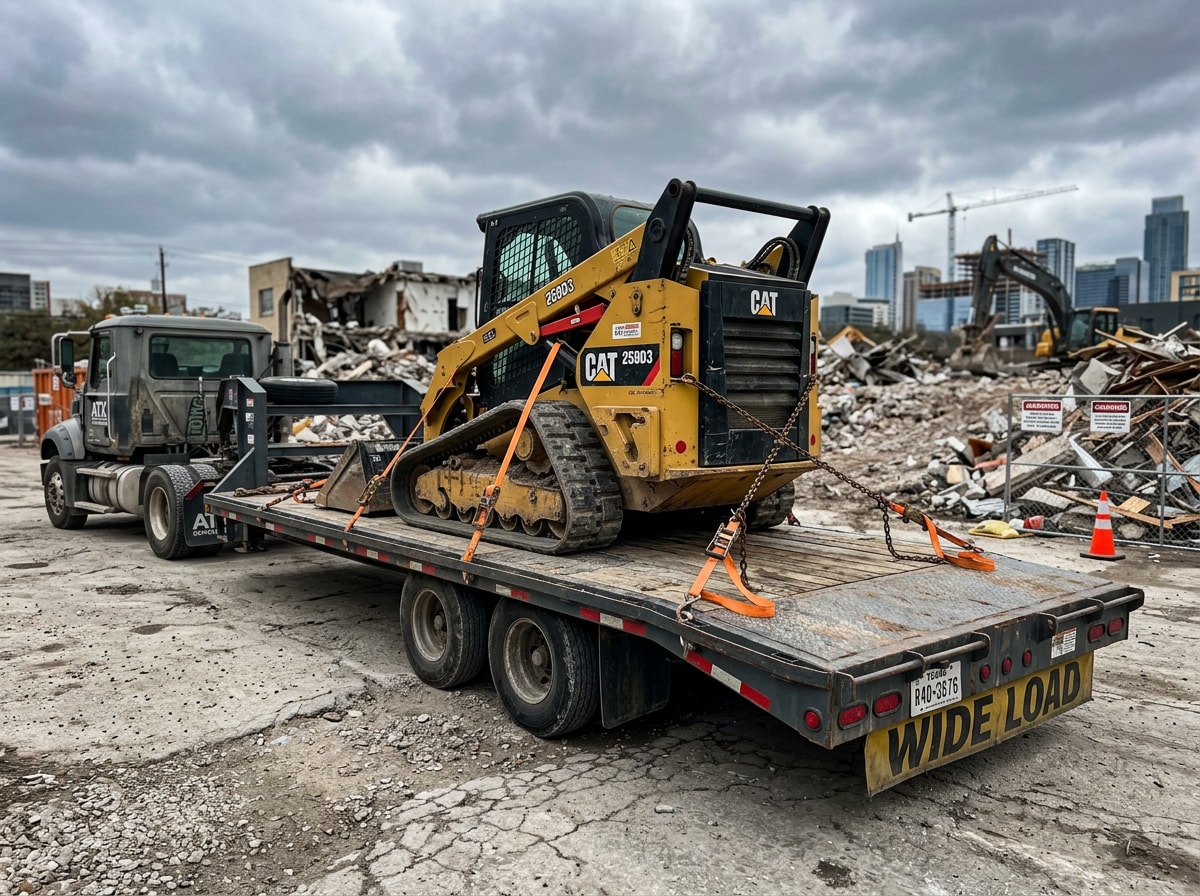
Types of Flatbed Trailers Available
Gooseneck Flatbed (Heavy Deck)
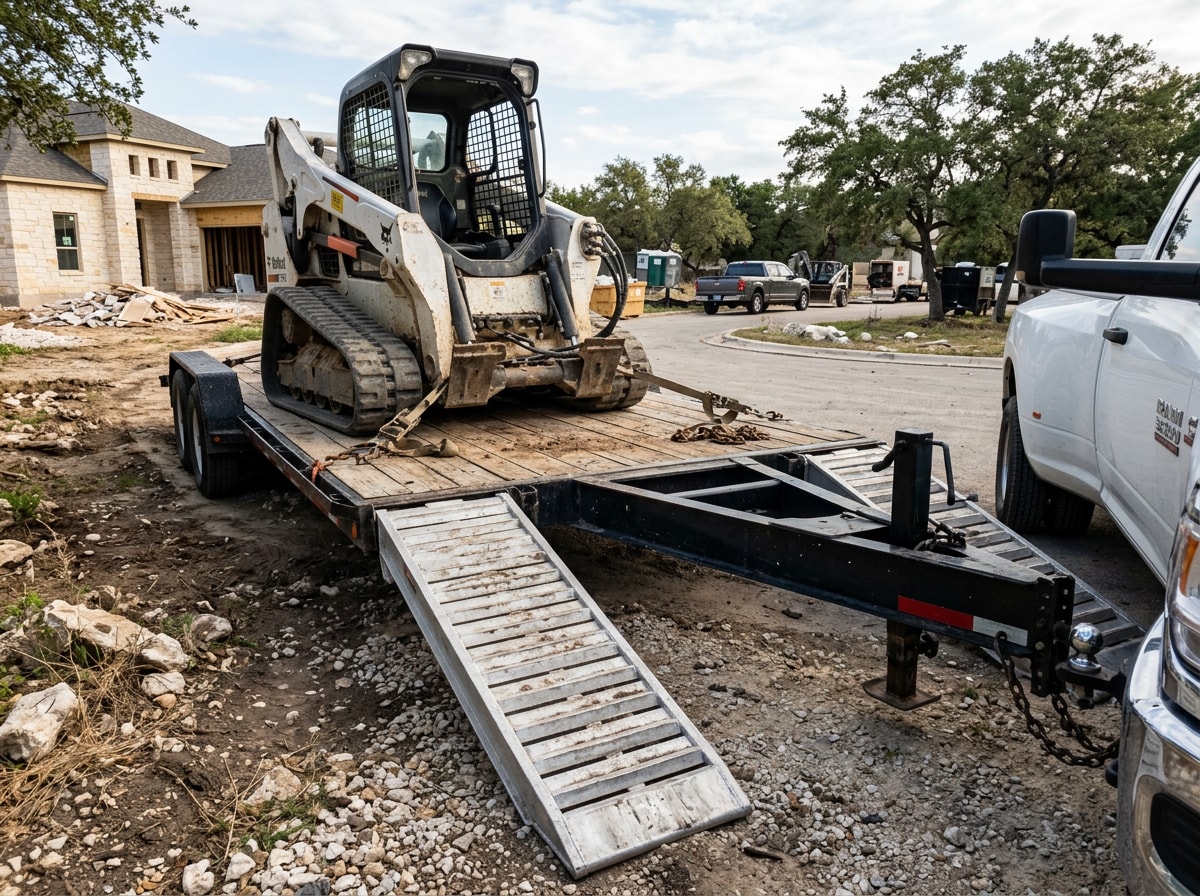
A gooseneck flatbed is typically pulled by a dually truck and connects at a lower hitch point, which drops the deck height and creates a gentler approach angle. Paired with megaramps, this setup is well suited to equipment that needs to drive on under its own power, like skid steers, rollers, and tracked machinery.
Tilt-Deck Car Hauler
A tilt-deck trailer hinges at the rear axle and tilts toward the ground, letting a winch pull a vehicle on without ramps. It is the more common choice for cars, light trucks, and ATVs, where a gooseneck's extra deck height and weight capacity are not necessary.
Moving Heavy Equipment, Debris & Site Materials in Austin
Flatbed hauling in Austin rarely happens in isolation. It usually pairs with site work: clearing a lot, demolishing a structure, or hauling debris off a job site. That overlap is exactly where our crews work most.
A single job might involve moving a skid steer to a job site, running lot clearing and site preparation, then hauling the resulting material off on the same trailer. Related services we handle alongside flatbed hauling include:
We also handle flatbed and heavy-haul logistics beyond the city, including our Austin, TX service area and the surrounding region. If you are coordinating a move that involves a shipping container alongside heavy equipment, our related guide on shipping container moving services in San Antonio, TX covers logistics that often overlap with flatbed jobs. You can also browse completed jobs in our project gallery to see how flatbed, demolition, and debris work typically fit together on a single site. For the full list of what we offer, start at our homepage.
FAQ
How much do flatbed moving services cost in Austin, TX?
Cost depends on load weight, distance, trailer type, and whether an oversize permit is required. A short local move of a single skid steer costs far less than a long-haul machinery relocation with permit and escort requirements. The most accurate way to get a number is to request a quote with your load's size, weight, and pickup location.
Do I need a permit for an oversized load in Texas?
Yes, if your load exceeds Texas's legal size or weight limits. Permits are based on exact measurements and weight, not estimates, so confirm dimensions before the truck is scheduled. The Texas DMV publishes the specific thresholds that trigger a permit.
What's the difference between flatbed moving and an enclosed trailer?
A flatbed has an open deck with no walls or roof, so it can be loaded from any side by crane, forklift, or ramp. An enclosed trailer only loads through a rear door, which rules out anything too tall, too wide, or too heavy to pass through that opening.
Can I book partial flatbed space (LTL) for a smaller load?
Yes. Flatbed LTL, or less than truckload, lets you pay for only the deck space your item needs instead of a full trailer. It is usually less expensive than booking a dedicated full-trailer run and works well for a single machine or vehicle that will not fill a 48-foot or 53-foot deck.
What types of heavy equipment can be moved on a flatbed?
Skid steers, excavators, forklifts, rollers, generators, roll-off dumpsters, vehicles, boats, and building materials are all common flatbed loads in Austin. If it is too large, heavy, or awkwardly shaped for an enclosed trailer, it can usually be loaded and secured safely on an open deck.
How is cargo secured on a flatbed trailer?
Straps, chains, and edge protection hold the load in place, with the number and strength of tie-downs scaled to the weight and length of the cargo. These requirements come from federal cargo securement rules, detailed by FMCSA, and apply to every commercial flatbed operating on public roads.