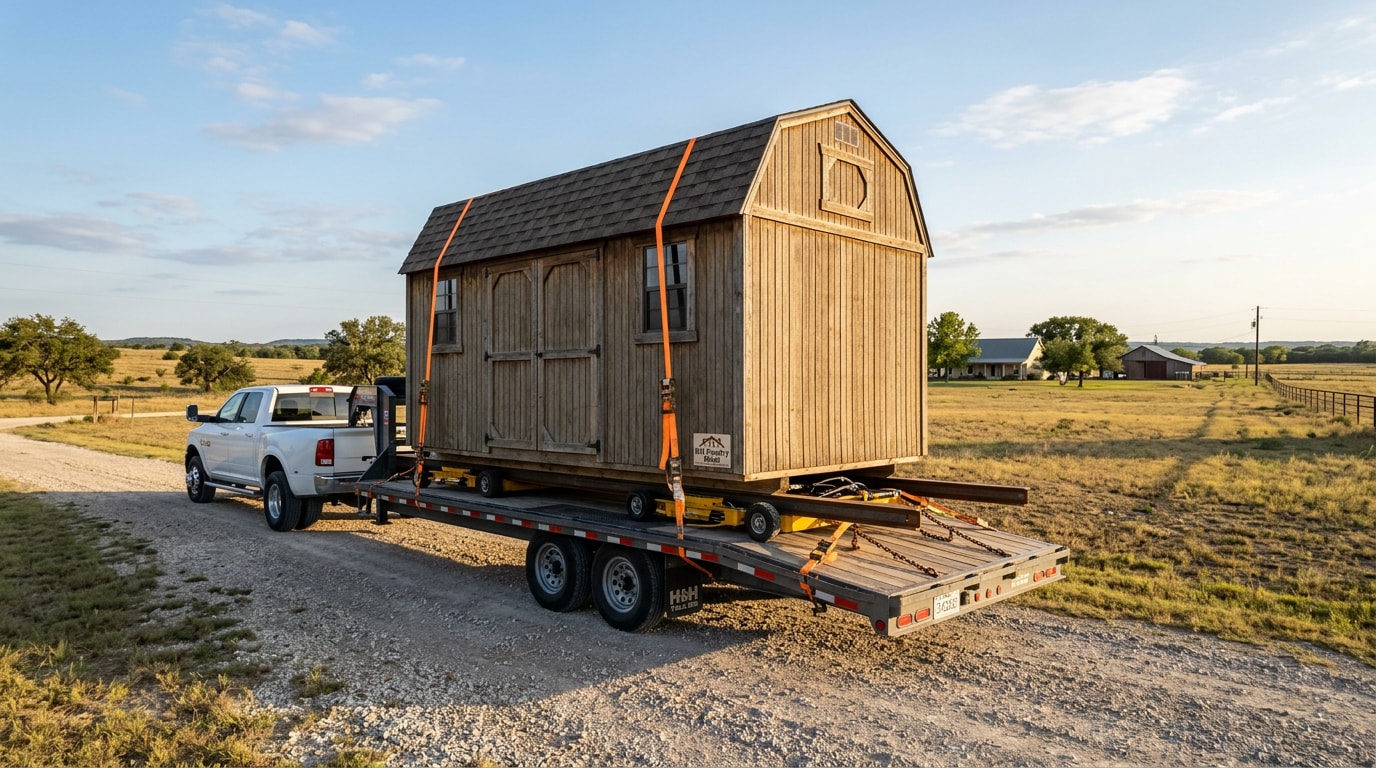
Shed moving companies in Marion, TX handle everything from a short in-yard slide to a cross-county haul down FM 1044. Before you book one, you need to know what the job actually costs, which permits apply, and what to do with the old pad once the shed is gone. This guide covers all three, plus the site-prep step most shed-moving guides skip entirely.
Why Hire Professional Shed Movers in Marion, TX?
Moving a shed looks simple until the frame cracks or someone gets hurt lifting it onto a trailer.
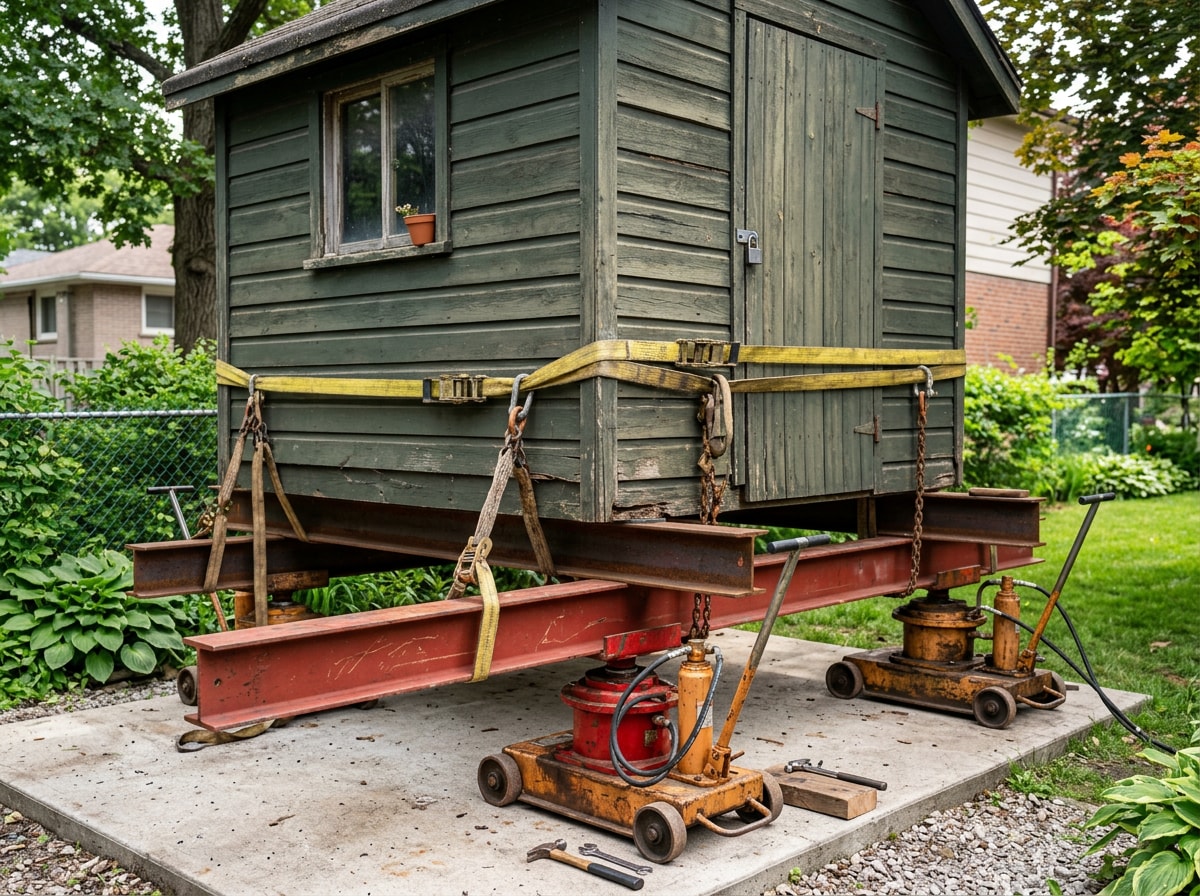
Professional movers carry the rigging equipment, hydraulic dollies, and insurance to handle the weight safely.
Manual lifting and repetitive material handling increase the likelihood of a musculoskeletal injury , which is exactly the kind of risk a trained crew with the right equipment is built to avoid.
It also takes local know-how. A 10x12 shed moving across a flat suburban lot is a different job than hauling the same structure down a gravel road to a new property outside town. Movers who work Guadalupe County regularly already know which routes handle a wide load and which don't.
What Services Do Shed Moving Companies Offer?
Most companies offer more than a basic hauling service. Typical offerings include:
- In-yard shed relocation and repositioning on the same lot
- Cross-property or cross-town moves
- Long-distance hauling for homeowners relocating entirely
- Releveling and anchoring once the shed is set on its new foundation
- Transport for tiny homes, cabins, and other portable buildings
Not every company offers disassembly and reassembly for oversized structures, so ask directly when you compare quotes. Skipping that question is one of the most common reasons homeowners get surprised by a change order mid-project.
How Much Does It Cost to Move a Shed in Marion, TX?
A typical shed move in a small, rural market like Marion costs less than the same job in a major metro, mainly because travel distances and labor rates run lower. These are starting ranges based on typical regional pricing patterns, not guarantees, your actual cost depends on size, distance, and site conditions.
| Move Type | Approximate Price Range | Typical Scenario |
|---|---|---|
| Small in-yard move | $150 – $300 | Repositioning a small shed on the same lot |
| Medium cross-town move | $400 – $900 | Moving a medium shed to a nearby property |
| Large or long-distance move | $1,000 – $2,500+ | Large shed or regional haul requiring special equipment |
Cost Factor: Distance of the Move
Local moves within Marion or elsewhere in Guadalupe County typically cost less than regional hauls because mileage and fuel add up fast once a shed leaves the immediate area. A move of a few miles might run a flat local rate, while long-distance transport to another county usually shifts to a per-mile pricing model. Ask upfront whether your quote uses a flat fee or a mileage rate.
Cost Factor: Complexity of the Move
Difficult terrain, tight access, and permit requirements all push the price higher. Rural Marion properties with uneven ground, gravel driveways, or livestock fencing often need extra setup time or smaller equipment, which can add an access-related surcharge. If the shed needs to be partially disassembled to clear gates or trees, factor in a separate disassembly cost on top of the base transport fee.
Local Regulations and Permits for Moving a Shed in Texas
Moving a shed on public roads in Texas can trigger permitting at two levels: a local building sign-off from the City of Marion, and, if the shed is oversized, a state permit through TxDMV. Which ones apply depends on the shed's width, height, and the route.
Texas has established size and weight limits for vehicles and loads moving with or without an oversize and/or overweight permit on Texas roadways and bridges.
A load becomes oversize in Texas past 8 feet 6 inches wide, 14 feet high, or state length limits , and crossing any one of those lines means the mover needs a permit before the load touches a public road.
Permitting and Compliance
A professional mover typically handles this paperwork for you: pulling the permit, checking dimensions against legal limits, and arranging an escort vehicle if the load's width or height triggers that requirement. Escort thresholds and exact permit costs vary by load size, route, and permit type, so confirm current figures directly through TxDMV's Motor Carrier Division permit portal rather than relying on a flat number from a sales call.
On the local side, a building permit is required for most new construction, remodeling, or additions within the City of Marion , and that includes accessory structures like sheds that are being relocated or re-anchored on a new foundation. Permit questions can be directed to the city by email at permits@cityofmariontx.org or by phone at 830-914-2391 , with in-person applications accepted at Marion City Hall.
If you're moving something larger than a standard shed, the permitting logic is the same one that governs flatbed hauling of oversized equipment and machinery, just scaled up.
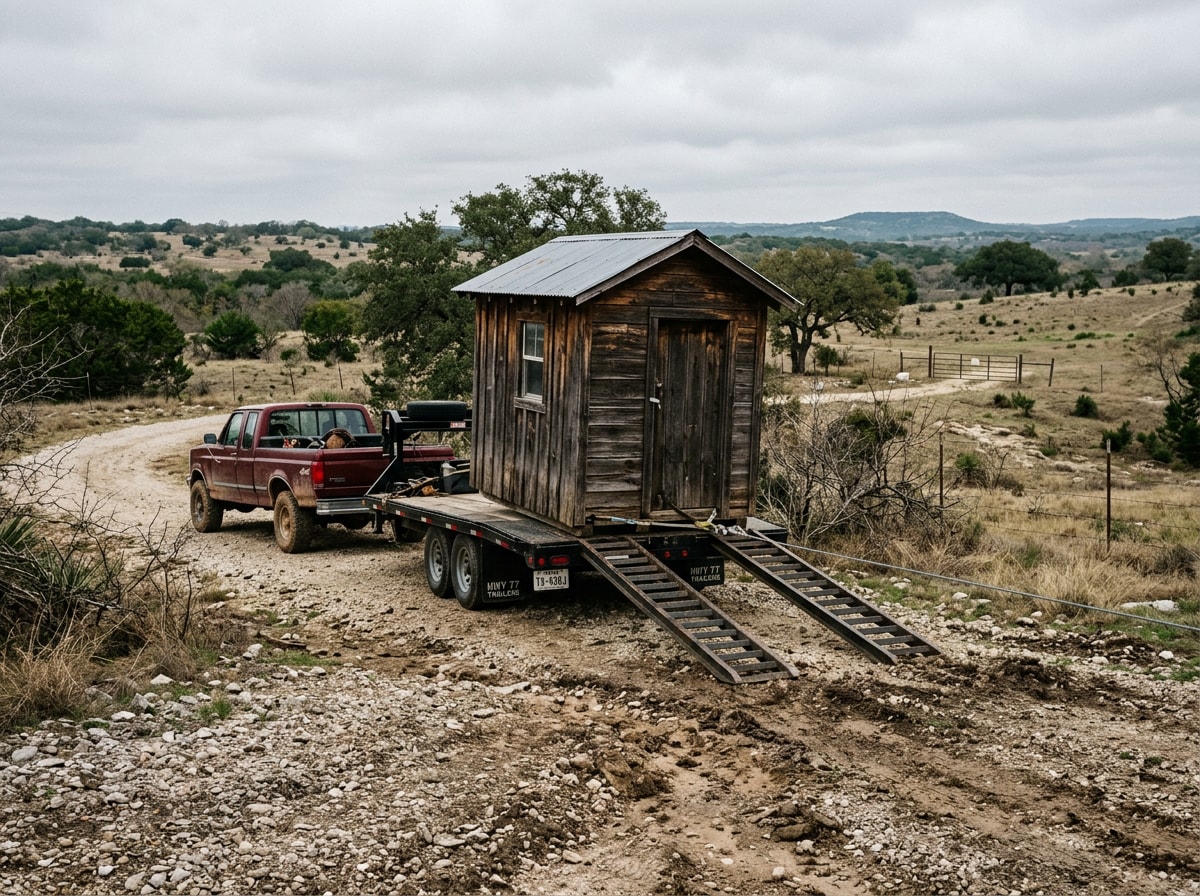
What Happens to the Old Pad, Debris, and Anchors After a Shed Moves?
This is the part most shed-moving guides skip. Once the shed is off the lot, you're usually left with a cracked concrete pad, rotted skids, old anchor bolts, and whatever junk was stored underneath or beside it.
Our demolition and debris crews across Guadalupe County regularly get called in right after a shed relocation to finish that part of the job. The work typically falls into three buckets:
- Breaking out the old pad or footing. A cracked concrete slab usually needs to come out before new landscaping or a new structure goes in. That's concrete demolition and site preparation work, not something the shed mover handles.
- Clearing brush and debris from the old footprint. Overgrown grass, brush, and leftover lumber around the old site often need lot clearing or debris hauling before the ground is usable again.
- Disposing of junk pulled out of or from under the shed. Old paint cans, scrap metal, and general clutter need a property cleanup or a residential dumpster rental for anything too bulky for a standard haul.
If your mover's quote doesn't mention what happens to the old pad and debris, ask before you sign. Request a quote for the cleanup side of the project and we'll scope it alongside your mover's timeline, not after.
Shed Moving Companies Serving the Marion, TX Area
Before requesting a quote, confirm the company actually works in or around zip code 78124 rather than just listing Marion among dozens of small towns on a statewide service page. Some large, multi-state movers pad their website with every town near San Antonio and Seguin without having done a recent job in any of them.
Ask for a reference or a recent photo from a nearby project, and verify the company can reach your specific road or subdivision. For context on how far companies in this region typically travel, see our Marion, TX service area coverage, and visit our homepage for the full list of services we coordinate around a shed move.
FAQ
Are there shed movers near me in Marion, TX?
Yes, several regional movers cover Guadalupe County, including Marion. Verify local coverage using the vetting tips above rather than trusting a directory listing alone before you book.
Do I need a permit to move a shed in Marion, TX?
It depends on size. A permit is required when the structure exceeds standard width or height limits, which triggers a TxDMV oversize load permit and, in some cases, a local building sign-off from the City of Marion.
What size shed can be moved by professionals in Marion, TX?
Professional haulers typically handle everything from small 6x8 sheds up to large 16x40 structures. Once a shed's width or height crosses the state's legal road limits, the move is classified as an oversize load and needs the additional permit covered above.
What happens to the old slab, skids, or debris after my shed moves?
That's cleanup, not transport, and most shed movers don't include it. Plan for a separate concrete removal, debris haul-off, or dumpster rental to clear the old footprint once the shed is gone.
Should I move my shed or have it torn down and rebuilt?
If the structure is sound and the new site is accessible, moving usually costs less than demolition plus new construction. If the shed is rotted, undersized, or sitting in the wrong spot for your new layout, tearing it down and starting fresh can be the more cost-effective option once you factor in the move's permit and access requirements.